

Protecting Future Design Space: Guidance on Ideal 5
Guidance on: The All Are One Ideals
Last updated October 6, 2026.
This guidance explains how transformerstcg.org applies the All Are One Ideals to a recurring question of game design, organized play, and community governance. It describes the application; it does not amend the Ideals.
- Primary Ideal: 5. We builders have the sustainability of the game in mind
- Related Ideal: 2. We builders are pro-collaboration
- Related Ideal: 3. We builders are pro-feedback
A card enters more than the environment that exists on the day it releases. It enters every environment it remains legal in afterward, and in a game that is still being built, that is a long time.
So a card has to be judged twice: for the choices it leaves players now, and for the room it leaves builders later. The second judgment is the harder one, because the cards it protects do not exist yet and nobody is waiting for them.
The failure this guidance addresses is a release that spends design space it does not own. Sometimes the cost lands on cards already printed, which stop being worth playing. Sometimes it lands on cards not yet written, which become unsafe, narrower, or longer because an older card has to be accounted for every time the mechanic is revisited. And sometimes it becomes a governance problem, when a current release and a future one need the same ground and only one of them has people in the room.
In brief
Design space is a shared resource of a continuing game, and spending it is ordinary development. The question is proportion.
When evaluating a card or a release, builders should ask whether existing cards keep real reasons to be played, whether future cards can compete without escalating, whether an effect forces later cards to carry wording written around it, whether it makes a planned mechanic or release substantially harder to build, and whether release pressure is quietly deciding how seriously a long-term concern gets taken.
A credible design-space problem should be settled before release, while revision is still cheap. The practical question is:
What will future designers have to give up because this card exists?
Sometimes the answer is very little. Sometimes it is enough that the design should change.
What design space is
Design space is the range of mechanics, effects, rates, interactions, archetypes and themes that designers can still safely explore. Every card spends some of it. Giving a character unusually efficient statistics moves the rate later characters are measured against. Printing a repeatable trigger changes which future cards can safely set it off. Creating an exceptional form of removal changes what later protection has to cover.
None of that is a problem in itself. It becomes one when a single design spends enough that other healthy designs stop being practical, and the effect runs in two directions.
Crowding out runs in two directions
Looking backward, a card reduces meaningful choice among cards that already exist. Why Cards Are Banned or Replaced records several. Fusion Borer offered enough Attack and Pierce together that competing Weapons struggled to justify a slot. Mission Briefing paired scaling draw with useful battle icons. Press the Advantage paired a strong faction effect with a 🟩 icon that let the card fetch itself out of a battle, so it was not a card you hoped to draw. In each case the complaint was about the cards that disappeared, not the games that were lost.
Looking forward, a card forecloses what has not been written. Horri-Bull // Ground Trooper did a point of damage for every ⬛️ card played, with no cap, which made any future card that could be played several times in a turn unsafe to give a ⬛️ icon. Impetuous Stand removed an Upgrade by sending it to the bottom of its owner’s deck rather than scrapping it, and protective cards being written for later releases began broadening from the scrap event toward any departure, which would have swept up older cards that had never caused trouble.
Forward crowding is the harder case precisely because the evidence is absent by definition. It is also the more expensive one. A card that is fine in the current metagame can still leave later designers writing around it every time they return to the mechanic, which is design debt that compounds quietly.
Future work has standing before it is finished
A current release is easy to see. Its cards exist, its art may be finished, testing has happened, and contributors want to finish what they started. A future release is design documents, prototypes, a named direction. That difference in visibility is not a difference in legitimacy, and an earlier stage does not make a project’s design space free to spend.
It does affect how much weight the claim carries. A vague possibility is not an objection. An active project with developed mechanics and a demonstrable collision is. The question is not whether a future card might one day want this ground, but whether the current decision creates a foreseeable cost that identifiable later work will inherit.
Release pressure argues against the future
The closer a release gets to done, the more expensive revision feels. A changed card may need another testing cycle. A removed one needs a replacement. Art, documentation, printing plans and schedules all move.
Meanwhile the benefit of shipping is immediate and the cost of spent design space arrives later, and usually lands on somebody else: another Wave, another designer, another group, or players who eventually find that an obvious idea cannot coexist with an old card. That asymmetry is structural, not a failure of character, and it reliably undervalues the future unless a process accounts for it deliberately.
It has a shape that reaches well past card games, into software and project development.
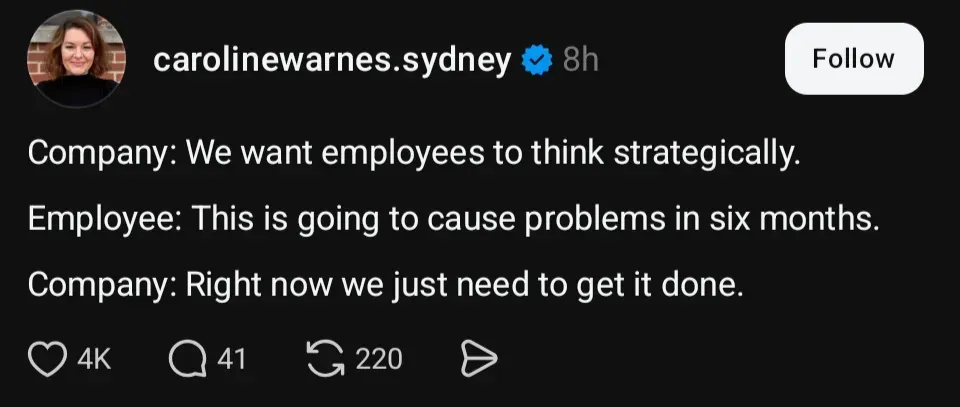
Every line of that is sincere, and the last one is usually right about the schedule. What it costs is the first. Foresight that is invited and then set aside often enough stops being offered, and the warnings go quiet long before the problems do.
That is not hypothetical here. In the last months of Allied Crossplay, testers held back feedback on beta cards because the design team appeared to have made up its mind, and some were told their feedback was unwanted. A meaningful Public Beta sets out that account and what it cost.
A release schedule does not get the design space of future releases for free.
What the record shows
The clearest case in this community’s history is also the one that cost the most.
During the Public Beta of “Ark Exodus” in 2023, a rework produced two unusually strong Beast support cards, Beast Mode and Feral Tenacity, at a time when plans already existed for a future Beast Wars-centered Wave built around the Beast trait. Several designers, [BF] billmoo among them, argued the pair was already near the practical ceiling for Beast support, and that releasing the strongest available Beast designs more than a year ahead of the dedicated Wave would leave that release with much less to work with. The proposal was not to cut the cards but to move them into the Wave they would otherwise pre-empt, where they would give it focus instead of spending its space in advance.
Many Allied Crossplay designers did not share the concern and prioritized finishing the release in front of them. The disagreement was therefore never really about two cards. It was about which time horizon a designer is obliged to protect.
Two details matter. The objection arrived during Public Beta because that was the first opportunity to make it: billmoo had stepped down before the closed alpha ended and had not been part of the discussions that ported the two cards. And the kind of change he proposed, moving cards to a different release, was exactly what the earlier Public Beta model had allowed, but it was arriving in a process that had come to treat the public phase as confirmation and tuning rather than reconsideration.
No single dispute ended Allied Crossplay, and the partnership had several unresolved structural problems converging at once. This was nonetheless the inciting episode. Refusing the objection of one of the two founding partners led directly to Team Bayformers restarting Wave BFC outside the shared process, and everything that followed followed from that. The structural problem it exposed is the one this guidance is about: people carrying substantial responsibility for future development could identify a collision with that work and had no dependable way to protect it. The fuller account, including transformerstcg.org’s view of its own predecessor’s part in the failures, is in The End of Allied Crossplay.
Collaboration includes future collaborators
Ideal 2 asks builders to collaborate, and collaboration has a time dimension. A team can make a decision today that leaves another team years later with fewer workable choices, and a designer can solve a present problem by transferring its cost to whoever builds next. Those contributors are not in the room and cannot argue for themselves.
Representing them is a governance job. When a current design substantially conflicts with established future work, the conflict should be resolved between the two projects on their merits and maturity, rather than settled automatically in favor of whichever is closer to publication. That may mean changing the current card, changing the future mechanic, or finding that the collision was apparent rather than real. What it should not mean is that proximity to release decides it.
Public Beta is where this should surface
Ideal 3 carries the other half. A meaningful Public Beta keeps substantial revision possible when testing exposes a problem, and design-space problems belong among the findings a Beta can return.
They look different from balance findings. A card can hold up in match results while testers report that it invalidates the alternatives, makes deckbuilding repetitive, creates rules pressure, or closes off something the next release needs. Those are findings, not complaints, and they deserve investigation on their own terms. If the answer is redesign, another cycle, or a later date, the process already permits all three.
Evidence, not speculation
Protecting future design space cannot mean that any imaginable future card blocks a present one. The space is broad enough that nearly anything collides with something conceivable, and a standard that loose is a veto rather than a safeguard.
A serious objection identifies the collision. Useful evidence includes an active future release already using the space, an established mechanic or archetype the card constrains, existing cards already being displaced, repeated templating changes needed to work around an interaction, testing that demonstrates the problem, or a rate that later designs would have to keep exceeding. The more a concern would restrict current work, the clearer its case has to be.
Replacement is the expensive fix
When a design-space problem survives release, it can sometimes be corrected afterward. The replacement record shows how: United Against Tyranny kept Press the Advantage’s text and lost the 🟩 icon; Hand of Adaptus kept Mission Briefing’s icons and narrowed which characters count; Mecha Star kept Fusion Borer’s role at a smaller rate; Summon Sky Shadow! changed nothing but the star count, so the stratagem pays for the material it brings; Debilitate kept accessible Upgrade removal and returned it to the game’s established pattern.
That is a real option, and it is worth having, because a failed card usually contains an idea worth keeping. It is also expensive. Players have learned the original, physical copies exist, decks use it, the legality documents have to carry both versions indefinitely, and every returning player has to be told why. Solving the problem before release avoids all of it.
The transformerstcg.org standard
transformerstcg.org evaluates a card against more than the environment it releases into. A design is weighed for the alternatives it leaves inside its own role, for the rate it sets that later cards will have to meet, for whether its rules text forces unrelated future cards to carry exceptions, and for which future effects become unsafe because it exists. Where a mechanic, archetype or release is already in development, a demonstrated collision with it is a present development issue rather than a problem for later.
A card does not have to maximize future flexibility. Every design closes something. The standard is proportion: whether the space a card spends is reasonable for what it contributes, and whether the idea worth keeping can survive a change to the part of the design that spends the space.
Release timing is not a tiebreaker. When a concern would have been treated seriously three months earlier, it is treated seriously now.
A practical test for builders
Before approving a design, ask:
- What existing cards become harder to justify because this exists?
- What obvious future cards become harder or unsafe to make?
- Will later designers need special wording to work around this interaction?
- Is any known future project already using the same design space?
- How developed is that work, and how specific is the collision?
- Can either design change without losing the reason it exists?
- Are we discounting the concern because this release is nearly finished?
- When did someone last raise a long-term objection here, and what happened to it?
- Who inherits the problem if we ship it and we are wrong?
- Would we approve this if we expected it to stay legal for twenty years?
If the answers show that a growing share of the game has to be built around one card, the time to revise it is while it is still easy to change.
Why this matters
The Transformers TCG is a continuing game. Every release inherits what came before it and becomes part of what everything after it inherits. The Ban List records the occasions when that inheritance got too expensive, and the end of Allied Crossplay showed the same problem reaching past individual cards into the question of whose work a structure is willing to protect.
Ideal 5 asks builders to keep the sustainability of the game in mind. In card design that means leaving usable room for people we will never meet, mechanics nobody has named, and releases whose cards do not exist. The release in front of us deserves to be finished well. The future deserves somewhere to go.